Assets and networks
Every asset with its value, depreciation and history.
- Fixed assets and depreciation
- Major repairs and upgrades
- Assets by locality and district
- Asset insurance
Energy and gas suppliers, water and sewage operators, district heating and waste services run thousands of assets, material stores and field crews. Business Central links assets, field work, purchasing and finance. Customer billing based on meter readings stays in your billing system, while Business Central receives the totals and handles the business side.
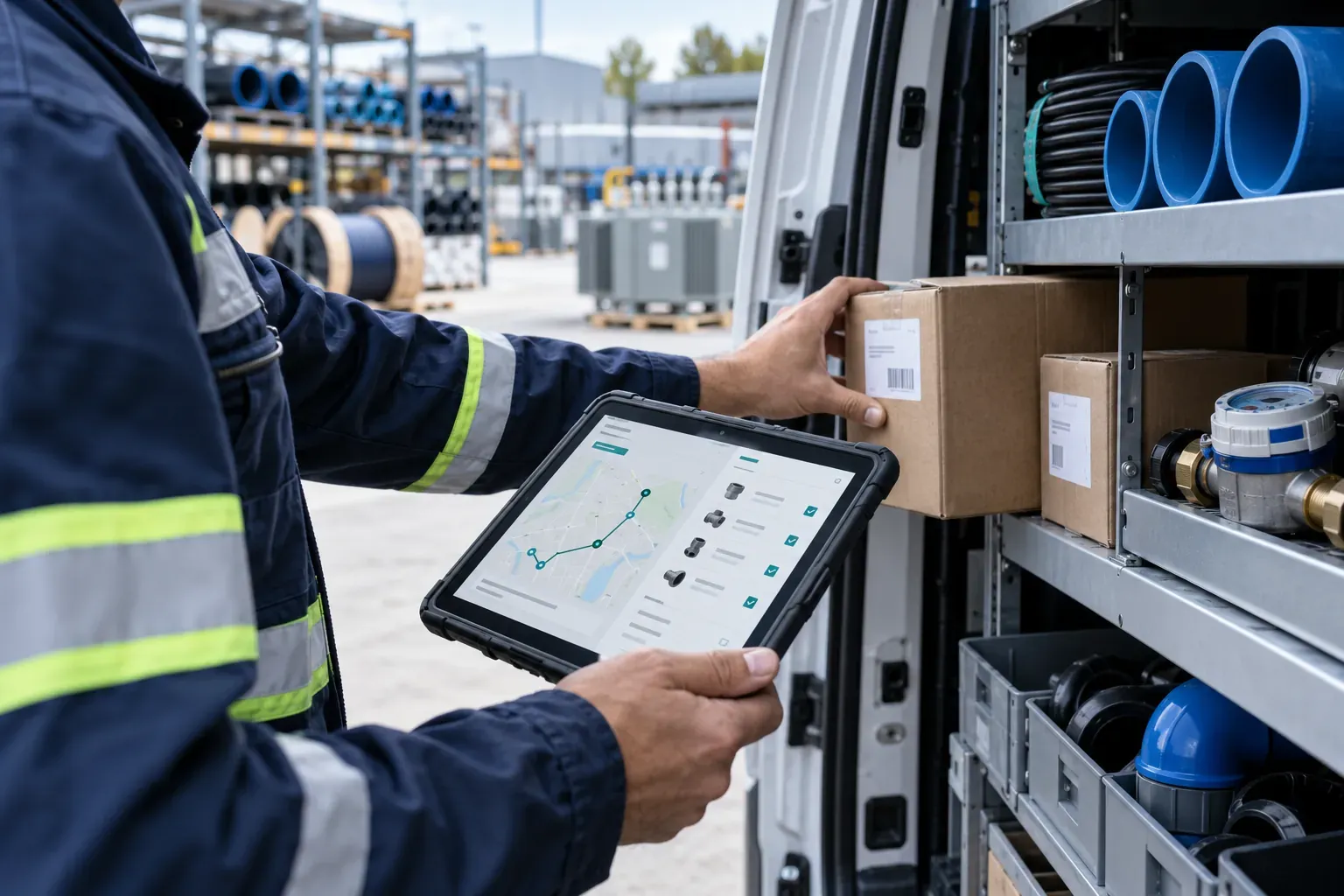
A pipe repaired three times in a year, materials bought for one job and used on another, a tariff justified with last year's figures — all of them start with costs that are not linked to an asset. When every job, material and crew hour is recorded against the asset that was worked on, you can see what each network and each service really costs.
Common situations at energy, gas, water and heat suppliers.
Standard Business Central features for utilities. The link to your billing and meter-reading systems is analysed in the project.
Every asset with its value, depreciation and history.
Emergencies, connections and inspections, with the materials and hours used.
Material stock by warehouse and by crew.
Capital projects and the cost of every service.
Results depend on your processes and data quality. Here is what becomes possible.
Costs are visible by service, locality and asset — figures you can rely on when justifying the tariff.
Minimum stock for emergencies is tracked in the system and consumption is posted to the job.
Repairs, costs and depreciation of an asset are in one place when you decide whether to repair or replace it.
We support you from the first estimate to life after go-live.
An indicative budget in a few minutes, based on your answers.
Learn moreClear stages, verified data and go-live on the agreed date.
Learn moreEvery employee learns the tasks of their role.
Learn moreHelp after go-live and further development of the system.
Learn moreEnter a few company parameters and instantly receive a preliminary project estimate.